
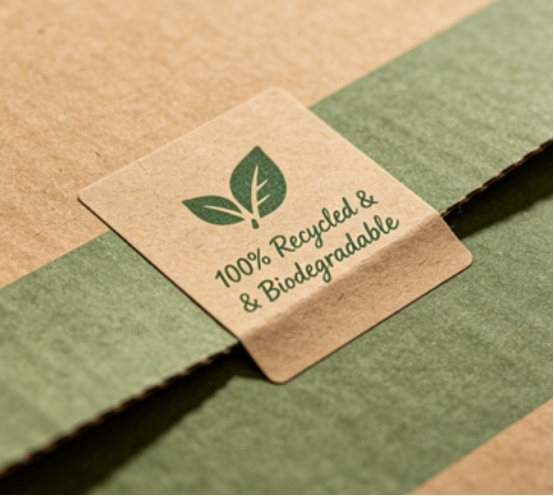
Today’s buyers are changing what brand loyalty really means. They look past just quality and cost. Now, they judge firms on their environmental and social duties. Sustainability has grown from a small issue to a common demand. It shapes buying choices in many fields. Packaging acts as the initial physical contact between an item and its purchaser. It shows these principles in a visible and touchable way. When people open a package made with green materials, they sense realness and concern for the earth. These elements boost ongoing buys.
Labels do more than share facts. They tell the story of a company’s morals. Picking green custom labels shows honesty and openness. This strengthens the firm’s eco-story. Brands that utilize biodegradable or recycled label materials enhance their credibility. They also match wider ESG (Environmental, Social, and Governance) aims. Such matching shows a steady promise to careful expansion. It draws both aware buyers and backers who value green business ways.
In the D2C world, firms connect straight with customers. There are no middle steps. So, each packaging pick faces close review. Current shoppers want clearness in where things come from and how they are made. Green packaging builds faith. It proves that brands value more than earnings. They respect the planet’s effects. Web comments often show this view. They compliment or fault brands on how earth-smart their wrapping looks.
Governments around the globe are making stricter rules on one-time plastics and non-reusable stuff. This urges brands to switch to green choices. Store sites and shipping allies now prefer companies with smaller carbon marks. They use reusable or breakable-down wrapping fixes.
Following green rules also opens doors to fresh world markets. There, eco-approvals are needed to join. For example, teaming with providers who offer checked approvals like ISO 9001 or BSCI keeps fair getting practices. These meet global hopes.
Starting green packaging soon helps D2C brands shine in crowded online spots. Eco-plans draw ties with similar store owners and online stars. These spread the brand’s word on duty and new ideas. Plus, better material getting can cut costs in the long run. It does this through smart supply line handling. This idea links to ways in Supply Chain Management: Optimize supply chain efficiency, reduce costs, and shorten delivery times. By adding green to buying plans early, brands protect their work from growing material prices and tougher eco-laws.
Recycled paper labels are crafted from high-quality post-consumer waste (PCW), ensuring a circular economy.This cuts the need for new wood pulp. They back round economy ideas. At the same time, they keep high-end looks for natural or simple brand styles. These labels handle top printing methods well. They do not lose feel or standard. So, they fit well for small-run handmade goods or big consumer items.
These come from fresh sources like polylactic acid (PLA) from X Sourcing. Biodegradable film labels give lasting strength plus earth care. They break down naturally in factory compost setups. They leave no bad leftovers in ground or water. Their water-proof nature suits them for food, drink, and beauty uses. There, clean standards and green goals matter most.
Labels from FSC-certified paper ensure careful forest care. Raw materials come from responsibly managed forests sourced through X Sourcing. When combined with water-based adhesives, which are vegan and non-toxic, they reduce harmful air chemicals (VOCs) during production. These materials not only enhance recyclability but also ensure the adhesives are free of harmful chemicals, aligning with D2C brands’ demand for eco-friendly, non-toxic solutions. This makes them ideal for beauty, food, and health-related products that require safe, eco-conscious labeling solutions. Additionally, these materials maintain strong adhesive power, which is crucial for fast-selling products that need durable labels.
Additionally, X Sourcing ensures that all labeling materials meet other industry-leading certifications, including BPI (Biodegradable Products Institute) certification. This further supports environmental responsibility by guaranteeing that products are certified as compostable, further enhancing sustainability. These certifications reinforce our commitment to ethical practices and high-quality, eco-friendly solutions, aligning with global standards and significantly boosting our credibility in the market.
| Material Type | Source/Composition | Key Benefits | Best Applications |
| Recycled Paper Labels | Recycled waste materials | Reduces need for new wood pulp, sustainable, high-quality | Natural/simplistic brand styles |
| Biodegradable Film Labels | Polylactic acid (PLA) | Breaks down naturally, waterproof, eco-friendly | Food, drink, beauty products |
| FSC-Certified Materials | Forest Stewardship Council certified paper | Ensures responsible forestry, reduces harmful air chemicals | Fast-selling consumer items |

Green custom labels might seem pricier at first than usual ones. However, looking at full life costs shows savings later. These come from better work flows. Lower trash removal bills, smarter shipping paths, and stronger buyer hold cover the higher stuff costs. Putting money into green materials also lifts brand worth. This unseen gain builds steady customer ties. It backs higher price plans.
| Cost Category | Upfront Cost | Long-Term Savings |
| Green Custom Labels | Higher than regular labels | Lower waste disposal, better shipping efficiency |
| Working with Sustainable Vendors | May involve premium suppliers | Reduced costs due to long-term partnerships, better material procurement |
| Leveraging Technology for Smart Production | Investment in digital printing tech | Reduced waste, fewer production errors, better stock management |
Working with approved providers keeps steady stuff quality. It also holds to changing eco-rules. We specialize in delivering end-to-end procurement solutions, covering the entire process from market research and supplier screening to sample verification and logistics distribution. this way gives full watch over getting steps. It covers checks on providers to last delivery. This cuts dangers from untrusty partners. Big buy deals for green stuff can drop costs per piece over time. Plus, clear vendor info boosts buyer trust in green promises.
Tech advances help balance cost savings with green aims. Digital print ways cut waste more than old plate methods. They avoid extra ink and start-up mistakes. Order-based making cuts extra stock dangers. It matches exact amounts to live need guesses. Data tools watch resource use in making rounds. They help brands check carbon release. And they spot spots for steady fixes.

Sustainability is not just an extra sales point anymore. It sits at the heart of making tough brand images. These can grow well amid changing buyer hopes and rule shifts. Adding green custom labels to wrapping plans keeps steadiness across all contact points. It also shows realness in earth promises. This even messaging builds deeper feelings between brands and shoppers. Those buyers focus on right-use ways.
Taking on green change plans sets brands as top players in their areas. They lead instead of just following outside pushes. Backers now check firms on ESG numbers when giving funds.Consequently, brands with transparent sustainability initiatives gain a competitive edge in securing investor funding. Also, new ideas from earth-aware efforts often start fresh item ranges. These open paths to rising markets. There, green-focused groups seek buys with real purpose.
A: Eco-friendly custom labels are essential for Direct-to-Consumer (D2C) brands because they reflect the company’s commitment to sustainability, aligning with growing consumer expectations for environmental responsibility. These labels enhance brand perception, build trust, and demonstrate transparency by using recyclable or biodegradable materials. Moreover, they support Environmental, Social, and Governance (ESG) goals, which are increasingly prioritized by consumers and investors alike.
A: Although eco-friendly packaging may have higher upfront costs, D2C brands can achieve long-term savings by evaluating the total lifecycle costs. This includes benefits like improved shipping efficiency, reduced waste disposal costs, and strengthened customer loyalty. Additionally, partnering with sustainable supply chain vendors and leveraging technology for smart label production helps optimize resource use and reduce waste, ultimately driving cost savings.
A: D2C brands can choose from a variety of eco-friendly label materials, including recycled paper labels, biodegradable film labels, and FSC-certified paper with water-based adhesives. These materials are not only sustainable but also offer high-quality performance. Recycled paper reduces the need for new wood pulp, while PLA breaks down naturally
films break down naturally without leaving harmful residues. FSC-certified materials ensure responsible forest management, contributing to sustainability throughout the product lifecycle.
Compostable labels break down into non-toxic components in composting conditions, while biodegradable labels decompose naturally over time, but not necessarily without harmful residues. Compostable labels are a subset of biodegradable labels with more specific environmental benefits.
A:No, eco-friendly labels do not compromise adhesive strength. They maintain strong adhesion while using sustainable, non-toxic, and recyclable materials.


